
Canada
From coastal cities to Arctic wild, Canada blends Indigenous, French, and British heritage with epic parks, wildlife, and memorable road trips.
Landmarks
Banff National Park
Canada’s first national park, set in the Rockies, with turquoise lakes, glaciers, and wildlife. Easy boardwalks pair with epic hikes, hot springs, and scenic drives like the Icefields Parkway.
Fun Fact
Photo
Arrive at Moraine or Lake Louise before sunrise for mirror reflections and parking. Use a polarizer lightly to cut glare without losing the lake’s color; include canoes for scale.
Travel

Summer parking fills by dawn—use shuttles from Lake Louise Ski Resort or Banff town. Check trail and wildlife advisories; weather changes fast, so pack layers and rain gear.
Family Travel
Choose short trails like Johnston Canyon to Upper Falls with railings. Pack snacks, bear spray if venturing farther, and teach kids to keep 30–50 meters from wildlife—observe quietly from pullouts.
Look Closer
At Bow Valley viewpoints, spot wildlife crossings over the highway—engineered bridges that help animals migrate safely. Talk about how design protects ecosystems.
CN Tower (Toronto Tower)
Toronto’s skyline icon with glass floors, panoramic decks, and a revolving restaurant. A fast ride up delivers sweeping views of Lake Ontario and the city grid.
Fun Fact
Photo
Shoot the tower from Roundhouse Park at blue hour for clean lines and train cars in the foreground. Inside, press your lens to the glass to reduce glare; bring a microfiber cloth.
Travel
Prebook your entry window, especially on weekends. Arrive near opening or after 7 pm to shorten queues. Combine with Ripley’s Aquarium next door to save steps.
Family Travel
Elevators can feel intense; prep kids with what to expect. Skip the EdgeWalk with little ones and enjoy the glass floor instead. Use family washrooms at the base before heading up.
Look Closer
On a clear day, spot the faint line of the Niagara Escarpment to the west; inside, find exhibits on the steel “Y” legs that make the tower stable in high winds.
Fairmont Le Château Frontenac
A grand castle hotel crowning Old Québec’s Dufferin Terrace, with copper roofs, turrets, and river views. It anchors the UNESCO-listed historic district and winter carnival scenes.
Fun Fact
Photo
For a full façade, shoot from Rue du Petit-Champlain or across the river on the Lévis ferry at sunset. In winter, frame sleigh riders on Dufferin Slide for lively foreground.
Travel
Even if not staying, you can visit the lobby and terrace. Go early morning for quiet streets, or evening for warm lighting. Reserve tea or brunch to enjoy interiors without rush.
Family Travel
Kids love the funicular between Upper and Lower Town—skip long uphill walks. Bring grippy footwear in winter; sidewalks can be slick around the terrace.
Look Closer
Find the stone plaques marking the old fortifications and look for beaver and maple leaf motifs carved into doors and fireplaces—classic Canadian decorative symbols.
Niagara Falls
Three thundering waterfalls straddling the U.S.–Canada border, famous for misty rainbows, boat rides, and easy boardwalk viewpoints that put you close to raw power.
Fun Fact
Photo
For soft, silky water, shoot from Table Rock with a tripod and ND filter at sunrise. For rainbows, aim late morning on sunny days; wipe mist often and use a lens hood.
Travel
Book timed boat tickets in advance and bring a light rain jacket. Visit early morning or late afternoon to avoid crowds; allow time to walk the Niagara Parkway.
Family Travel
Use waterproof layers and pack a change of clothes for kids. Strollers roll well along the promenade; plan snack breaks at the Welcome Centre and set a meeting spot before boat boarding.
Look Closer
Find the brass markers showing the international border and read the plaques about Indigenous portage routes that predate today’s viewpoints.
Foods You Can't Miss
Butter Tart
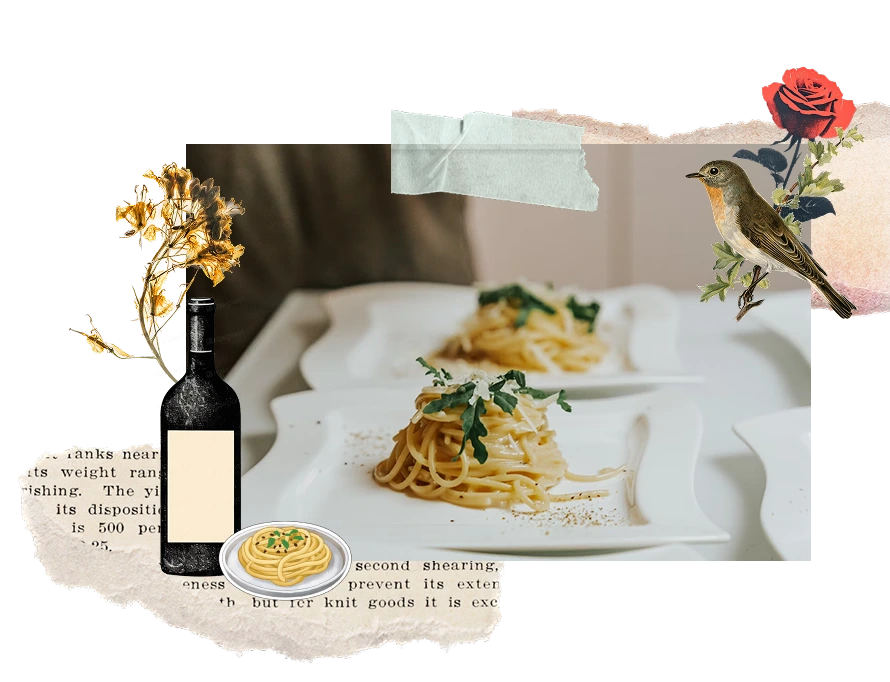
A small tart with a flaky shell and a buttery, sugary filling that ranges from runny to set. Some add raisins or pecans; purists keep it plain.
Fun Fact
Where to Eat?
Visit The Maid’s Cottage in Newmarket, Ontario. Award-winning tarts with gooey centers, friendly service, and take-home packs for the road.
Photo
Slice one to reveal the glossy center. Use side light to catch the shine, and sprinkle crumbs on the plate for texture and scale.
Authenticity
Look for a blistered, flaky pastry and a filling that shimmers—not grainy. A gentle wobble signals that rich, buttery, caramel taste.
Order Like a Local
Ask for “plain, runny” if you like oozy centers, or pick raisin/pecan for texture. Warm it slightly and add a small pour of cream.
Maple Syrup
Canada’s spring harvest in a bottle. Sap from sugar maples is boiled down into pure amber syrup that sweetens breakfasts and fuels cozy sugar-shack traditions.
Fun Fact
Where to Eat?
Head to a Québec sugar shack like Sucrerie de la Montagne. Family-style meals, “syrup on snow,” and tours make it tasty, authentic, and fun for kids.
Photo
Backlight a small glass bottle to glow the amber tones. Shoot on rustic wood with a slow pour for motion; wipe drips for clean highlights.
Authenticity
Look for “100% pure” on the label, Grade A with a stated color. Ingredients should list only maple syrup and show a Canadian origin.
Order Like a Local
Ask for “tire d’érable” (syrup on snow) at shacks. For breakfast, pick medium amber for balanced flavor over pancakes or French toast.
Pancakes
Fluffy buttermilk stacks built for maple syrup. In cities, cafés serve blueberry-topped versions that make an easy, kid-approved morning start.
Fun Fact
Where to Eat?
Try Mildred’s Temple Kitchen in Toronto. Famous blueberry pancakes, bright space, and steady service—book ahead for weekend brunch with kids.
Photo
Go overhead for a tidy stack shot. Capture a syrup pour mid-stream; use window light and a dark plate to make the golden crumb stand out.
Authenticity
A good pancake has crisp, golden edges and a tender middle. Real butter on top and real maple syrup—not table syrup—signal quality.
Order Like a Local
Add blueberry compote and ask for real maple syrup. Pair with peameal bacon for a Toronto touch and coffee for an easy, filling start.
Poutine
Québec’s comfort classic: hot fries, fresh squeaky cheese curds, and rich gravy. Simple, messy, and perfect after a chilly walk or late night.
Fun Fact
Where to Eat?
Go to La Banquise in Montréal. Open late with many styles, it keeps the classic front and center and delivers fast, family-friendly counter service.
Photo
Shoot close to show steam and melted curds. Use a shallow depth of field, and frame a fork lift for that stretchy, cheesy pull.
Authenticity
Fresh curds are key; they squeak. Gravy should be savory, not gloopy, and fries should be double-cooked for crisp edges that hold up.
Order Like a Local
Start classique. Then try smoked meat or peppercorn gravy. Share a large bowl; poutine is rich and best eaten hot at the table.
Tim Hortons
Canada’s go-to coffee and donut stop. Simple drip coffee, Timbits, and breakfast sandwiches make reliable fuel for long drives and early starts.
Fun Fact
Where to Eat?
Stop at Store #1 on Ottawa Street North in Hamilton. The original location adds history, photos, and a sense of place to a familiar menu.
Photo
Frame the red-and-cream sign outside, then a tray of Timbits inside. Capture a candid family toast with steaming cups for a warm memory.
Authenticity
For the classic taste, order brewed coffee fresh off a recent pour. Donuts are baked to spec; ask staff what just came out for best texture.
Order Like a Local
Ask for a “double-double.” Add a box of assorted Timbits for sharing, or pair a breakfast sandwich with a crispy hash brown on the side.
Culture and Symbols
Bear
Black and grizzly bears roam Canada’s forests and mountains. Seeing one safely from a distance is a powerful reminder of true wilderness.
Fun Fact
Souvenir
Choose bear silhouette art or patches. Skip real fur; support artists who donate a portion to wildlife groups.
Where to Find
Great Bear Rainforest, BC—guided boat or land tours stress safe viewing and Indigenous stewardship; prime salmon runs draw bears in fall.
Beaver
Canada’s national animal. Skilled engineers that build dams and lodges, reshaping streams and creating wetlands that shelter many species.
Fun Fact
Souvenir
Pick maple-and-beaver coin sets or woodblock prints. Museum shops often note maker details and support conservation programs.
Where to Find
Elk Island National Park, Alberta—pond edges show gnawed stumps and domed lodges; easy loops and dusk visits raise your chances.
Canada Day (July 1)
A national holiday marking Confederation in 1867. Communities celebrate with concerts, flags, and night fireworks that light up summer skies.
Fun Fact
Souvenir
Pick a dated lapel pin or small flag to mark the year of your trip—easy to scrapbook and link to specific memories.
Where to Find
Ottawa’s downtown core—pedestrian zones, family areas, and easy transit access make it festive yet manageable with kids.
Canada Flag
The red-and-white maple leaf flag debuted in 1965. Its bold, simple design signals unity and is easy for kids to spot across a crowd.
Fun Fact
Souvenir
Choose a small stitched flag or iron-on patch. Fabric labels with fiber content and maker name tend to last longer in scrapbooks.
Where to Find
Parliament Hill, Ottawa—daily flag-raising and rooftop flag traditions; nearby shops carry quality flags made in Canada.
Canada Goose
A familiar honking V-formation migrant with black neck and white chinstrap. You’ll see them on city lawns, lakes, and coastal marshes across Canada.
Fun Fact
Souvenir
Choose feather-print scarves or enamel pins. Avoid real feathers; opt for wildlife-friendly items that note ethical sourcing.
Where to Find
Stanley Park, Vancouver—lagoons and lawns host flocks year-round, with easy paths, playgrounds, and bathrooms for low-stress family time.
Ice Hockey
Canada’s winter heartbeat. From backyard rinks to NHL arenas, the fast, physical game builds community and brings families together.
Fun Fact
Souvenir
Pick a local team jersey or toque. For kids, mini sticks and pucks are packable and perfect for hotel hallway games.
Where to Find
Hockey Hall of Fame, Toronto—hands-on exhibits and Cup history; downtown location fits with CN Tower and aquarium in one easy day.
Maple Leaf
Long before the flag, the maple leaf symbolized Canada in song and regimental badges. It hints at forests, syrup season, and fall color.
Fun Fact
Souvenir
Pressed-leaf jewelry, maple wood boards, or letterpress prints. Verify the maker and region for a meaningful, traceable memento.
Where to Find
Laurentians, Québec—scenic drives in late September to early October bring vivid foliage, with easy viewpoints and family picnic areas.
Moose
Canada’s largest deer, with broad antlers and long-legged stride. Moose thrive in boreal forests and wetlands and often roam near lakes at dawn and dusk.
Fun Fact
Souvenir
Look for carved wood miniatures or antler-motif art from local makers. Choose pieces labeled with the artisan and region for a real keepsake.
Where to Find
Algonquin Provincial Park, Ontario—quiet roads and canoe routes at sunrise boost your odds, with family-friendly trails and education centers.
RCMP Officer (Mountie)
The Royal Canadian Mounted Police are known for red serge dress uniforms, Stetsons, and a role in Canada’s national story and pageantry.
Fun Fact
Souvenir
Look for licensed RCMP pins or patches. Choose items from museum shops to ensure proceeds support heritage programs.
Where to Find
RCMP Musical Ride Centre, Ottawa—stable tours and seasonal shows give close views and kid-friendly exhibits about horses and training.
Totem Pole
Monumental cedar carvings by Northwest Coast Indigenous Nations. Poles record lineage, events, and clan crests with powerful animal figures.
Fun Fact
Souvenir
Buy from Indigenous artists or co-ops; look for the artist’s name, Nation, and materials. Avoid mass-made “tourist totems.”
Where to Find
UBC Museum of Anthropology (Vancouver) and Alert Bay—authentic poles with clear labels and context; guided talks deepen understanding.

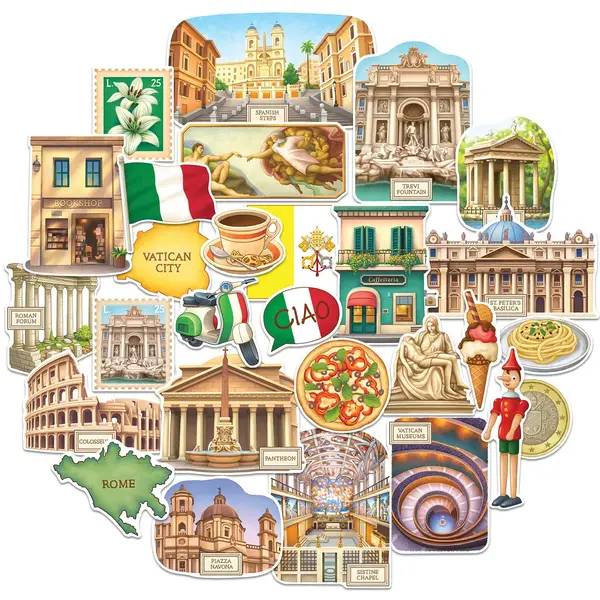



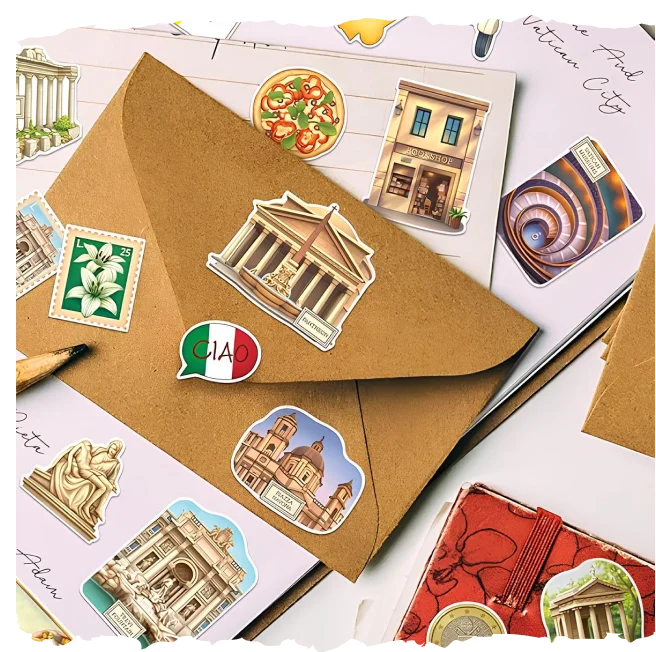
What was your favorite element to draw and why?
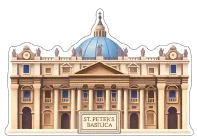
Capturing the basilica’s grandeur in a small sticker was a challenge! Balancing the intricate dome details while keeping it visually clear took precision and patience.

Cici
What is your favorite story from researching about the destination?
This Cacio e Pepe represents Rome’s love for simple, timeless flavors. We wanted to include it as a cultural icon—proof that three ingredients can hold centuries of tradition.

Angela
Travel Journaling Prompts

Travel Journaling Prompts
Travel Journaling Prompts
Travel Journaling Prompts







What was your favorite element to draw and why?
Capturing the basilica’s grandeur in a small sticker was a challenge! Balancing the intricate dome details while keeping it visually clear took precision and patience.
Cici
What is your favorite story from researching about the destination?
This Cacio e Pepe represents Rome’s love for simple, timeless flavors. We wanted to include it as a cultural icon—proof that three ingredients can hold centuries of tradition.
Angela