
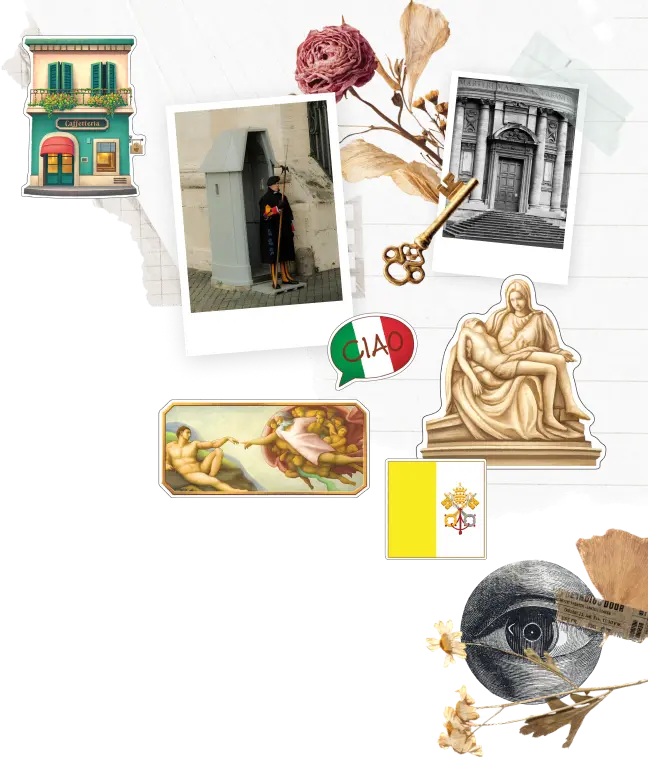
Rome
Ancient forums, lively piazzas, and family-friendly gelato stops—Rome blends history with daily life. Walk from the Colosseum to Trastevere, trace empire stories, and share slow meals under glowing squares. Learn, linger, connect.
Landmarks
Antico Caffè Greco
A 1760 café where poets, painters, and travelers traded ideas; velvet rooms and portraits serve espresso with history.
Fun Fact
Photo
Capture a cappuccino beside a gilt mirror; ask for a window table to frame passersby on Via dei Condotti.
Travel
Prices vary for table versus bar; stand at the banco for quicker, cheaper drinks, then tour the rooms.
Family Travel
Order simple pastries for kids and a hot chocolate. Use the visit as a short, quiet break from the shopping streets.
Look Closer
Scan the walls for signed notes and portraits—mini biographies that turn coffee time into a gallery stroll.
Colosseum
Rome’s amphitheater tells stories of engineering and spectacle; arches, corridors, and arena views reveal how crowds once roared.
Fun Fact
Photo
Book the arena or underground access; shoot through an arch to frame the ellipse. Golden hour warms stone and reduces harsh shadows.
Travel
Reserve timed tickets. Pair with the Forum on the same day. Bring water; shade is scarce in summer.
Family Travel
Use a model or diagram to show the hypogeum before you enter. Take breaks on the upper ring breezes.
Look Closer
Find the travertine holes—iron clamps once sat there; they were stripped in later centuries, leaving today’s pockmarks.
Open Door Bookshop
A cozy secondhand and English-language shop in Trastevere; stacks invite slow browsing and a literary souvenir.
Fun Fact
Photo
Shoot the doorway stacked with spines, then a flat lay of your finds on cobblestones outside for texture.
Travel
Go mid-morning on weekdays for quiet shelves. Pair with a stroll through Trastevere’s lanes and a riverside pause.
Family Travel
Let kids pick a Rome picture book or map; set a budget and a time limit to keep the stop calm and fun.
Look Closer
Check the stamped inside covers—many carry notes from past travelers; add your own date to continue the story.
Pantheon
A perfect dome crowns a simple portico; the oculus opens the sky to the floor, showing Roman concrete at its purest.
Fun Fact
Photo
Shoot from the rear alley for a fresh angle, then inside, expose for the bright oculus to keep detail in the coffers.
Travel
Visit early morning or late evening to skip tour groups. Shoulders and knees covered help with entry on service days.
Family Travel
Kids love the “rain indoors” idea; if it’s wet, show the floor drains that whisk water away.
Look Closer
Count the coffer rings thinning toward the oculus—an elegant way the Romans lightened the dome’s weight.
Piazza Navona
An oval plaza on a Roman stadium’s footprint; fountains, painters, and façades make a living room under open sky.
Fun Fact
Photo
Frame the Fontana dei Quattro Fiumi with Sant’Agnese’s twin towers at golden hour; reflections dance after a light rain.
Travel
Come late afternoon when street artists set up. Book dinner nearby but stroll first as buskers animate the space.
Family Travel
Set kids on a fountain statue hunt—river gods, dolphins, obelisk—then share pizza al taglio on a bench.
Look Closer
On Bernini’s Nile figure, the veiled head hints the source was unknown—an art joke about geography.
Roman Forum
Temples, basilicas, and triumphal routes sit in one valley; columns and fragments map how Rome ran markets, law, and ritual.
Fun Fact
Photo
Enter from the Capitoline for a grand overlook, then descend. Morning light sidelight columns and keeps heat lower.
Travel
Wear sturdy shoes; paths are uneven. Combine with Palatine Hill for shade and views. Bring a simple site map for bearings.
Family Travel
Turn ruins into a role-play: senator, priestess, vendor. Pause at the House of the Vestals’ gardens for benches and calm.
Look Closer
On the Arch of Titus, spot the menorah relief from the Temple in Jerusalem—history carved in procession.
Sistine Chapel
Michelangelo’s ceiling and the Last Judgment compress scripture into muscle and color; the room still holds the quiet of conclaves.
Fun Fact
Photo
Photography is banned inside; instead, shoot the approach corridors and Chapel exterior, then add a detail postcard to your journal.
Travel
Visit early in your route before fatigue. Stand center-left to view the Creation of Adam. Use the basilica exit if open.
Family Travel
Prep a ceiling scavenger hunt—Adam’s hand, Jonah, sibyls—to focus quiet eyes. Plan a courtyard snack break afterward.
Look Closer
Spot Michelangelo’s self-portrait as flayed skin in the Last Judgment—his stark signature on faith and craft.
Spanish Steps
A sweeping staircase links Piazza di Spagna to Trinità dei Monti; people-watching and soft evening light make it linger.
Fun Fact
Photo
Shoot from mid-landing toward Via dei Condotti for vanishing lines. At sunrise, you’ll have clean steps and pastel skies.
Travel
Sitting on the steps is restricted; expect enforcement. Use nearby cafés for rests and restrooms.
Family Travel
Treat the staircase as a short climb with rewards: Barcaccia splash, church view, then a gelato on a side street.
Look Closer
Find the inscriptions on the obelisk and the subtle S-curve of the staircase—geometry designed to guide the eye.
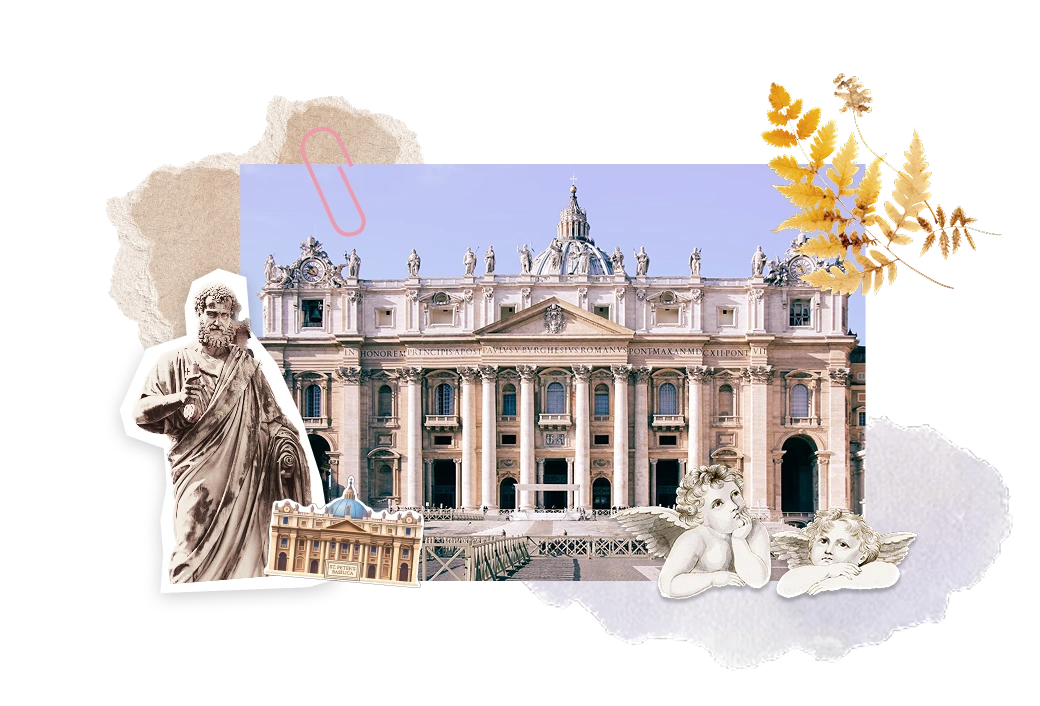
St. Peter’s Basilica
Michelangelo’s dome crowns the heart of Catholicism; inside, scale, light, and Bernini’s bronze canopy turn faith and art into one space.
Fun Fact
Photo
Climb to the dome and shoot across St. Peter’s Square at blue hour to frame the colonnades and obelisk in soft, even light.
Travel
Arrive at opening or late afternoon. Prebook the dome climb. Cover shoulders and knees to pass dress checks without delay.
Family Travel
Arrive at opening or late afternoon. Prebook the dome climb. Cover shoulders and knees to pass dress checks without delay.
Look Closer
Find the nave floor markers that compare church sizes worldwide; let kids “measure” Rome against their favorites.
Trevi Fountain
A baroque stage of sea gods pours from a palace façade; water and white stone turn a tight lane into Rome’s favorite ritual.
Fun Fact
Photo
Arrive at dawn or near midnight for space. Use a slow shutter on a mini-tripod to blur water while keeping figures sharp.
Travel
Watch pockets in crowds. Approach from quiet side alleys. Bring small coins ready so you don’t fumble at the edge.
Family Travel
Set a simple plan: each person gets one toss and one photo spot. Agree on a meet point off the steps before you enter.
Look Closer
Spot the “Asses’ Ears” relief—Barberini’s symbol—tucked in the carvings; symbols hide family stories on the façade.
Vatican Museums
Miles of galleries lead to the Raphael Rooms and the Sistine Chapel; ancient marble and vivid frescoes show how Rome collected the world.
Fun Fact
Photo
Photograph the Spiral Staircase from the top landing; wait for a lull to capture a clean spiral with people for scale.
Travel
Book a timed entry. Choose early or late slots. Follow a highlights route to save energy and avoid decision fatigue.
Family Travel
Pick three must-sees and promise gelato after. Use audio guides. Plan a playground or café stop nearby on Borgo Pio.
Look Closer
In the Gallery of Maps, find your family’s region on the frescoes and trace routes you walked to link art to life.
Villa Borghese & Pincio Terrace
Rome’s central park blends shaded paths, a small lake, bike rentals, and Pincio views that turn sunset into an easy ritual.
Fun Fact
Photo
Rent a rowboat for lake reflections, then head to Pincio at golden hour; place a silhouette against the skyline.
Travel
Enter from Piazza del Popolo. Reserve Galleria Borghese tickets if you want Caravaggio and Bernini indoors.
Family Travel
Choose bikes or a pedal cart; pack a picnic and bubbles. Playgrounds and wide lanes lower everyone’s stress.
Look Closer
Find the Temple of Aesculapius island—an 18th-century “ancient”—a fun chat about real versus romantic ruins.
Foods You Can't Miss
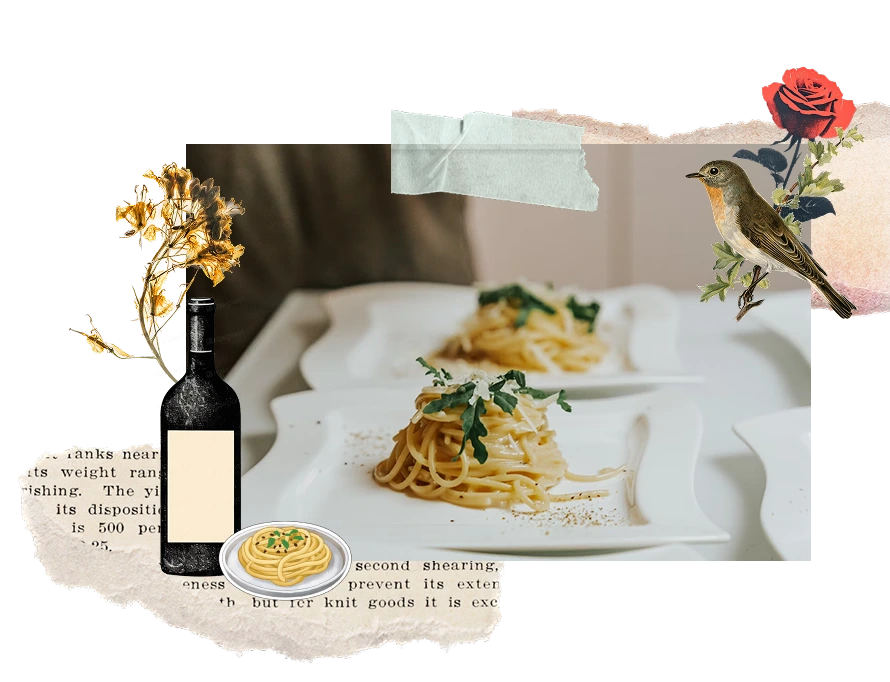
Cacio e Pepe
A Roman pasta of Pecorino Romano, black pepper, and starchy water whisked to a glossy emulsion—comfort food built on technique.
Fun Fact
Where to Eat?
Felice a Testaccio—iconic table-side toss that nails the creamy emulsion. Book ahead; keep it classic and add a simple contorno.
Photo
Capture the table-side toss at a 45° angle near a window. Use burst mode to freeze the pepper flecks and glossy strands.
Authenticity
Look for Pecorino Romano DOP and a peppery aroma. No cream, no butter, no clumps; the sauce should coat, not pool.
Order Like a Local
Ask for “tonnarelli cacio e pepe.” Skip extras. Pair with house red or sparkling water; dessert can wait for gelato.
Gelato
Dense, slow-churned gelato served in modest mounds; bright, seasonal flavors make an easy daily ritual for the whole family.
Fun Fact
Where to Eat?
Gelateria del Teatro—clean, natural flavors. Try sage-raspberry or pistachio. Lines move fast and the lane is photogenic.
Photo
Find shade—direct sun melts fast. Shoot cones against a pastel wall or cobbles; include tiny spoons for playful scale.
Authenticity
Seek muted colors, stainless tubs with lids, seasonal boards, and labels like “pistacchio di Bronte” or “nocciola Piemonte IGP.”
Order Like a Local
Ask for “una coppetta” (cup) or “un cono” (cone) with due gusti. In pay-first shops, get the scontrino, then choose flavors.
Italian Espresso (Il Caffè)
A short, intense shot sipped standing at the bar—morning rhythm in a cup, quick and focused.
Fun Fact
Where to Eat?
Sant’Eustachio Il Caffè, near the Pantheon—historic roaster. Stand at the banco to pay less and watch the bar choreography.
Photo
Frame the demitasse low with crema in focus. Include the counter and receipt stub for a true bar-moment story.
Authenticity
Crema should be hazelnut-brown and persistent, aroma clean not burnt. Cups are pre-warmed; sugar is optional.
Order Like a Local
At the counter: “Un caffè, per favore.” For a dash of milk: “un macchiato caldo.” Drink at the banco, pay, and go.
Pizza Romana (Tonda)
A wafer-thin, round pie with a crisp snap and charred rim; simple toppings let the crackly base shine. Built for sharing.
Fun Fact
Where to Eat?
Da Remo, Testaccio—fast, no-frills, perfect char. Go early; share a marinara and a margherita. Avoid glossy tourist menus nearby.
Photo
Shoot overhead to show edge-to-edge thinness. Include the paper placemat and draught beer for a true Roman pizzeria vibe.
Authenticity
Rim should be leopard-spotted and crisp; slices crack, not flop. Toppings are light; fior di latte and bright tomato.
Order Like a Local
Say “una margherita ben cotta” for extra char, or add “fiordilatte.” Start with a supplì and finish with an amaro.
Culture and Symbols
“Ciao!”
Rome’s warm, informal hello and goodbye. Simple, musical, and easy for kids to use with shopkeepers and café staff.
Fun Fact
Souvenir
Choose a letterpress postcard or minimalist tee from indie studios; clean typefaces age well in a travel journal.
Where to Find?
Browse Monti’s boutiques and Campo de’ Fiori market stalls; small presses sell prints that feel local, not touristy.
Creation of Adam
Michelangelo’s near-touching hands crown the Sistine ceiling, turning a chapel into a lesson on life, spark, and reach.
Fun Fact
Souvenir
Buy a small postcard or museum print; flat, matte paper fits scrapbooks and keeps colors closer to the fresco.
Where to Find?
See it at the Sistine Chapel in the Vatican Museums; stand mid-nave, center-left, and look upward for the clearest view.
Italian Flag (Il Tricolore)
Green, white, and red stripes symbolize hope, faith, and charity. The tricolore waves from schools, ministries, and memorials across Rome.
Fun Fact
Souvenir
Choose a woven patch, silk scarf, or enamel pin with stitched edges and true, deep colors—not printed polyester.
Where to Find?
See giant flags at the Vittoriano on Piazza Venezia; the terrace view and daily ceremonies make the colors feel alive.
Pietà
Michelangelo’s youthful Mary cradles Christ in polished marble; calm folds and perfect anatomy still hush the nave.
Fun Fact
Souvenir
Choose a small relief plaque or high-quality postcard from St. Peter’s shop; keep tones neutral to match the marble.
Where to Find?
First chapel on the right inside St. Peter’s Basilica; go early morning for thinner crowds and quieter viewing.
Vatican City Flag
Yellow and white halves carry St. Peter’s crossed keys and papal tiara, a compact emblem of faith and sovereignty.
Fun Fact
Souvenir
Pick Vatican stamps or a small lapel pin from the official post or museum shops; packaging includes the coat of arms.
Where to Find?
Spot flags in St. Peter’s Square and along Vatican walls; the Vatican Post Office sells neat stamp sets with the emblem.
Vatican Euro Coin
The tiny state mints limited euro sets with papal imagery; collectors prize the small runs and crisp designs.
Fun Fact
Souvenir
Buy official sets or commemoratives from Vatican numismatic counters; look for sealed packaging and certificates.
Where to Find?
Check the Vatican Post/Philatelic & Numismatic Office near St. Peter’s; staff guide choices and authenticity.
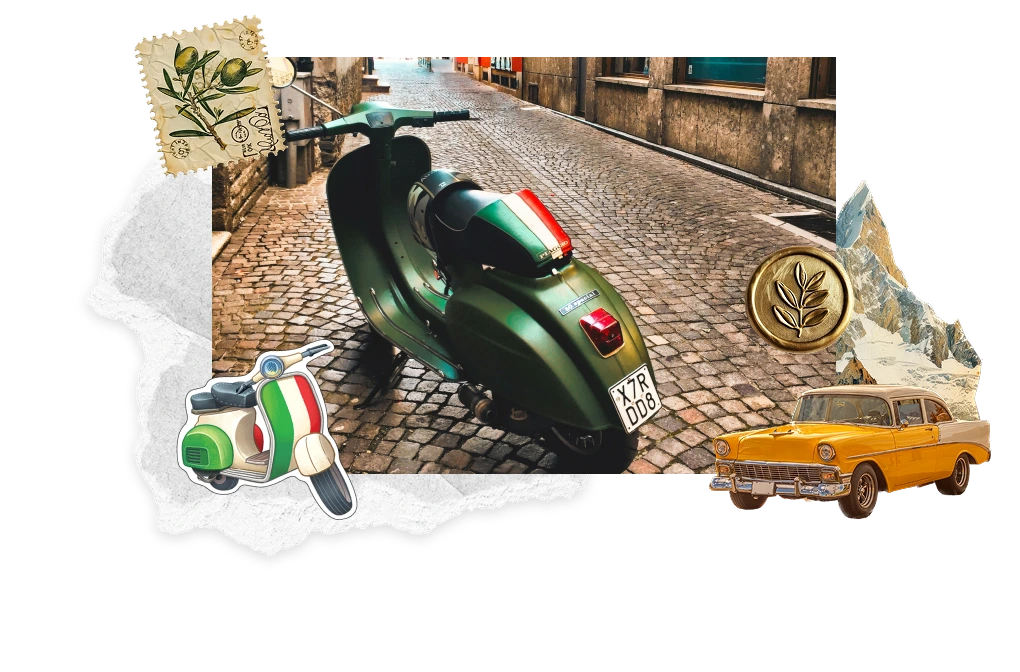
Vespa
Since 1946, the Vespa has been the icon of effortless Italian style, adventure, and timeless elegance.
Fun Fact
Souvenir
Launched in 1946 by Piaggio, the Vespa’s enclosed body kept grease off clothes, which helped it win daily riders.
Where to Find?
See rows of Vespas in Trastevere and Monti. Join a guided scooter or sidecar tour for safe family-friendly street views.
Wooden Pinocchio Doll
Italy’s wooden boy with a growing nose appears as marionettes and toys—simple craft with a moral tale kids remember.
Fun Fact
Souvenir
Choose hand-carved pieces with smooth joints and non-toxic paint. Ask for maker stamps or certificates.
Where to Find?
Visit traditional toy shops or Bartolucci boutiques near the Pantheon and Trevi; displays show sizes from tiny to tall.

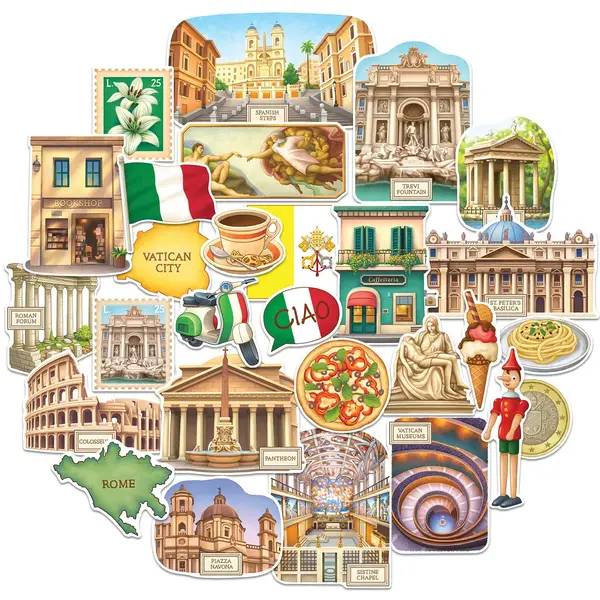


What was your favorite element to draw and why?
Capturing the basilica’s grandeur in a small sticker was a challenge! Balancing the intricate dome details while keeping it visually clear took precision and patience.

Cici
What is your favorite story from researching about the destination?
This Cacio e Pepe represents Rome’s love for simple, timeless flavors. We wanted to include it as a cultural icon—proof that three ingredients can hold centuries of tradition.

Angela
Travel Journaling Prompts
Travel Journaling Prompts
Travel Journaling Prompts
Travel Journaling Prompts








What was your favorite element to draw and why?
Capturing the basilica’s grandeur in a small sticker was a challenge! Balancing the intricate dome details while keeping it visually clear took precision and patience.
Cici
What is your favorite story from researching about the destination?
This Cacio e Pepe represents Rome’s love for simple, timeless flavors. We wanted to include it as a cultural icon—proof that three ingredients can hold centuries of tradition.
Angela